The 2026 Brick Wall: The End of Fashion's Voluntary Era

For over two decades, the ultra-fast-fashion industry has operated inside a regulatory vacuum. Built on hyper-speed, new design-to-retail 24-to-48-hour pipelines, synthetic material blends, and rapid trend obsolescence, fast-fashion conglomerates built multi-billion-dollar empires by prioritizing raw volume over structural value.
Those days are quickly ending. 2026 marks the fashion and textile industries voluntary, storytelling-driven era is over.
As sweeping compliance mandates take effect across the European Union and key U.S. states, the operational costs of selling cheap, disposable, synthetic apparel directly to consumers are skyrocketing. The industry has officially entered its "glass house" era, where backend supply chain data, chemical safety, and circular accountability, part of the latest strict conditions for legal market entry.
1. Digital Product Passports (DPPs): The End of Opaque Supply Chains
Under the European Union’s Ecodesign for Sustainable Products Regulation (ESPR), textiles sold within the EU require a mandatory, scannable Digital Product Passport (DPP).
The Technology Architecture
Rather than linking to a basic brand homepage, DPPs utilize the GS1 Digital Link standard embedded via scannable QR codes, NFC chips, or washable RFID tags inside a garment's wash label. Every individual garment receives an item-level serialized "digital twin" in the cloud.
Context-Aware Transparency
When scanned, dynamic data redirection serves specific information tailored to the user-
For Consumers: Scanning the tag reveals exact fiber breakdowns, factory labor compliance, chemical footprints, and raw material origins (tracing back to Tier 3 yarn spinners).
For Secondary Resellers: It acts as a digital title deed, displaying a cryptographic "Proof of Authenticity" and lifecycle event history that fuels peer-to-peer luxury resale.
For Automated Recyclers: Sorters access exact fiber ratios (e.g., 80% Organic Cotton / 20% Elastane) to route garments into automated fiber-to-fiber recycling streams.
The opaque marketing tricks historically used to hide low-grade synthetic construction, and fragmented supply chains are now legally obsolete. Regulations are enforceable.
2. The Unsold Inventory Destruction Ban: Ending Overproduction
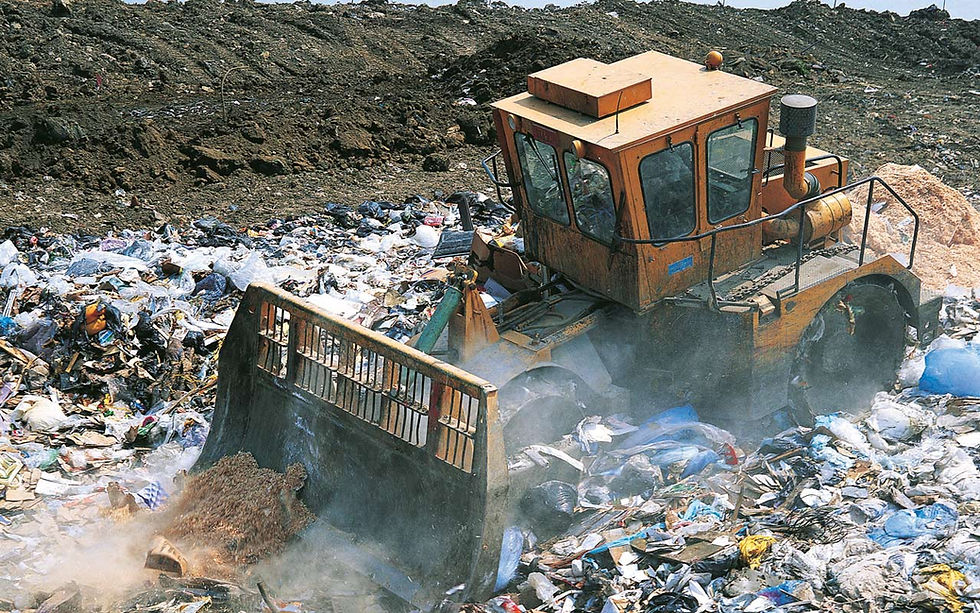
Effective July 19, 2026, large apparel and footwear enterprises operating in the EU face an explicit legal prohibition against incinerating or dumping unsold and returned clothing.
Balance Sheet Liabilities
Historically, mass-retail models overproduced inventory by 30% to 40% to chase volatile micro-trends, destroying deadstock to preserve brand equity and artificially drive demand. Under the 2026 mandate, brands are legally required to publicly disclose the exact volume and weight of discarded inventory alongside their precise waste treatment routes.
The Operational Pivot
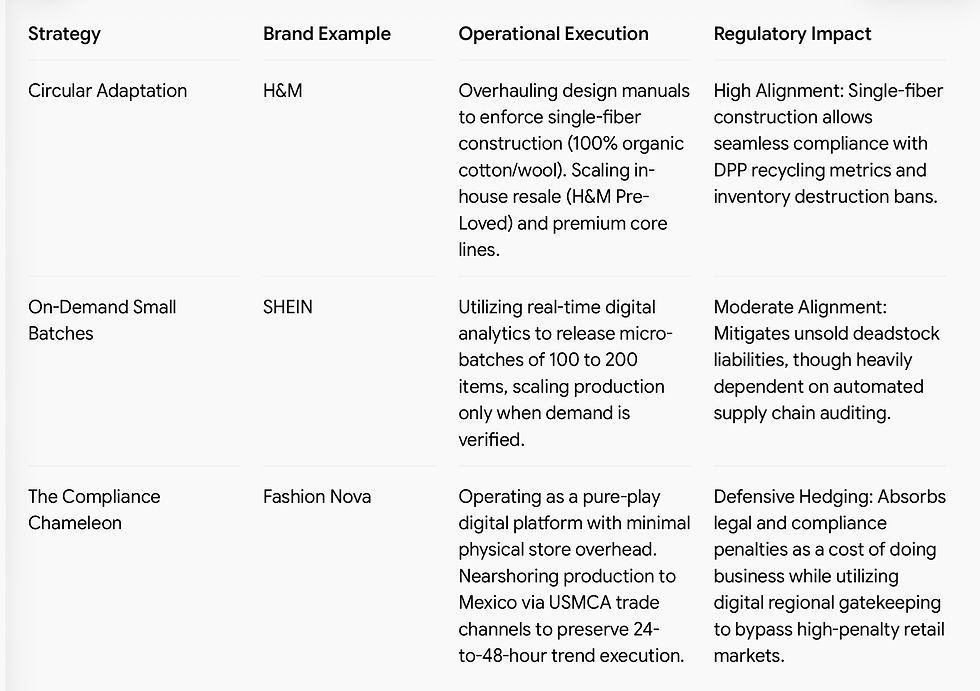
Unsold stock has transformed from a simple accounting write-off into a high-cost corporate liability. To avoid severe financial penalties, mass-market brands are forced to re-engineer production forecasting models, pivot toward "on-demand" micro-batch runs or set up formal in-house resale and fiber-recycling channels. Added costs, passed on to the end consumer.
3. PFAS & Chemical Bans: Raising the Baseline Cost of Cheap Apparel
A wave of strict statutory bans targeting Per- and Polyfluoroalkyl Substances (PFAS) commonly known as "forever chemicals" is taking effect across the U.S. (including California, New York, Colorado, and Maine) and the EU under REACH frameworks.
The Chemical Overhaul
Fast-fashion giants relied heavily on inexpensive, petroleum-based PFAS treatments to impart stain-resistance and water-repellency to low-cost synthetic fabrics.
The Cost of Compliance
Replacing these persistent chemicals with bio-based, non-toxic alternatives requires complex chemical overhauls and testing protocols costing between $1,000 and $5,000 per SKU. This added compliance overhead drastically narrows the margin gap between cheap disposable clothing and durable, investment-grade garments.
Only multi-million dollar companies can afford entire compliance departments, until now. The Verified Compliance Network (VCN) offers an affordable, monthly subscription to ensure compliance and a searchable compliance database. VCN offers every fashion and textile entity, the opportunity to become compliant, verify compliance, and ensure compliance through an affordable universal platform.
The Strategic Divergence: How Retail Giants Are Responding
The 2026 compliance landscape has split retail conglomerates into two distinct operational camps-
The Cultural & Economic Impact: The Gen Z "Closet Asset" Shift
For young consumers, particularly Generation Z college graduates entering the professional workforce or trade industries, the regulatory mandates serve as a legal accelerant for a broader behavioral shift. Quality over quantity has become the GenZ norm, over buying a handful of cheap tops that only last one-wash.
GenZ consumers are experiencing buyer's remorse and cognitive dissonance from purchasing low-quality garments that disintegrate after a few washes. Young consumers are shifting from Image to Infrastructure-
Cost-Per-Wear (CPW) Analysis: Evaluating value mathematically (e.g., a $400 blazer worn 100 times = $4 CPW vs. a $15 synthetic top worn twice before warping = $7.50 CPW).
The Closet as a Liquid Portfolio: Using secondary resale marketplaces (Depop, Vestiaire Collective, The RealReal) to treat durable clothing as liquid capital that can be resold when cash is needed, a top priority.
Verifiable Trust: Using embedded DPP QR codes to verify authenticity, chemical safety, and fabric origins directly from a smartphone before acquiring pre-owned goods, today’s young consumers are smarter than any consumer before.
The 2026 regulatory wall has fundamentally altered global retail. In an era governed by item-level Digital Product Passports, unsold inventory bans, and strict chemical enforcement, a fashion brand's long-term survival no longer depends on how fast it can replicate a viral social media trend.
Instead, survival belongs to brands that design for structural durability, map their supply chains with total transparency, and build modular, evergreen inventory models capable of thriving in a legally enforced circular economy. The Verified Compliance Network supports efforts to ensure compliance regulations are implimented and brands survival can continue.
Today’s compliance laws are developing the fashion and textile industries into a truly transparent and responsible sector of global commerce, rather than an industry that claims to be.