Beyond the Shredder: The Five Operational Workarounds and Loopholes Brands Are Navigating Around the EU's Destruction Ban

On July 19, 2026, the European Union’s landmark ban on destroying unsold apparel and footwear officially took effect. Under the Ecodesign for Sustainable Products Regulation (ESPR), the EU Destruction ban was hailed as the death knell for fashion’s dirtiest secret, shredding and burning overstock.
For decades, incinerating or shredding pristine overstock was the quiet industry standard used to clear warehouse space, protect brand exclusivity, and prevent grey-market discounting. The scale of textile waste generated by the global fashion and apparel industry represents one of the largest waste streams in the world.
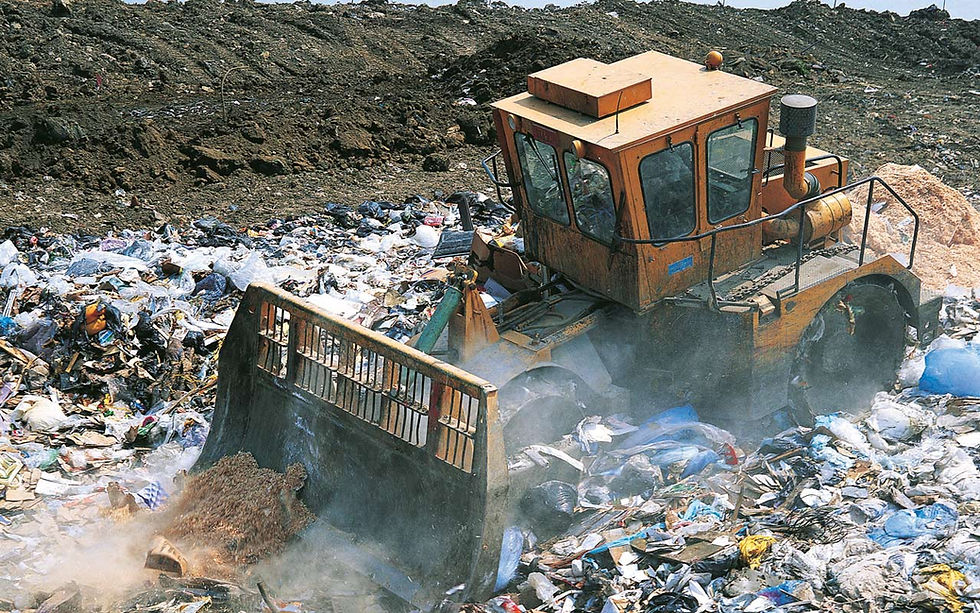
Total Textile Waste Produced has reached 92 million tonnes (approx. 101 million US tons) every year. This is equivalent to dumping or burning one garbage truck full of clothes every single second.
Approximately 57% of discarded garments end up in landfills each year. 25% of clothing is burned or incinerated. The combined elimination rate has reached 87% of all textile fibers produced annually are either landfilled or incinerated.
True Garment-to-Garment recycling is only 12%, while less than 1% is ever recycled into new garments.
The EU Destruction Ban is currently targeting large enterprises; with several tiered roll outs meant to provide the industry a sharp choice; eliminate overproduction or adapt operations to comply. Both, meant to create a more sustainable and transparent fashion industry.
The Worldwide Fashion Network (WWFN) did a deep dive and examination of global supply chain flows and trade logistics, revealing a more complex reality. While the EU Destruction Bans regulations closed primary disposal routes, workarounds and legal loopholes have emerged. Trade auditors, logistics brokers, and compliance specialists are tracking a growing list of these operational workarounds, revealing five (5) primary loopholes allowing inventory to move through alternative channels, bypassing the law altogether.
1. The "Charity Rejection" Rebound Loophole
Under the ESPR derogation framework rules, a company can obtain a legal exemption to destroy unsold stock if it “attempts” to donate the goods to EU-based non-profits or social enterprises and the donation is formally rejected. To prevent abuse, regulations require brands to publish a donation offer for a minimum of eight weeks or offer items directly to at least three eligible social economy entities.
The Strategy: Brands offer massive, unsorted, un-palletized seasonal lots (e.g., 50,000 mixed garments) on strict pickup timelines.
The Friction: Most regional charitable organizations lack the warehouse square footage, sorting labor, or logistics capital to accept and process massive, mixed shipments on short notice. Once the non-profits issue a formal refusal due to capacity limits, the brand receives a legally valid Certificate of Rejection. This documentation provides full compliance coverage under the EU waste hierarchy.
2. The "Hygiene & Damage" Classification Game
The ESPR framework explicitly allows the destruction of garments deemed unsafe, hygienically compromised, or damaged beyond repair.
The Strategy: E-commerce returns account for one of the largest drivers of excess inventory, with up to 20% of apparel purchases returned. When items return with minor makeup smudges, missing tags, or damaged polybags, restoring them (cleaning, re-bagging, re-tagging) often costs €3–€5 per item.
The Friction: Logistics providers are increasingly reporting returns as "hygienically compromised" or "damaged beyond economic restoration". This shift re-classifies the inventory from "unsold usable apparel" to "exempt compromised waste," freeing it from destruction bans, giving companies a “free pass.”
3. Off-Balance-Sheet Exports to Non-EU Transit Zones
The ESPR destruction ban and its upcoming mandatory reporting rules apply strictly to unsold goods held, recorded, and discarded within the 27 EU member states.
The Strategy: Brands transfer title ownership of aging inventory to third-party clearinghouses or offshore subsidiaries before end-of-season reporting deadlocks hit.
The Friction: The physical inventory is shipped across EU borders to free-trade zones in the UK, Switzerland, Turkey, the UAE, or Asia. Once outside EU jurisdiction, the inventory is no longer bound by European disposal audits. The third-party owner can then sell, downcycle, or dispose of the stock across secondary global markets without exposing the primary brand to EU regulatory penalties.
4. Downcycling as "Fiber Recovery"
Where destruction is approved under an exemption, ESPR dictates that companies follow the EU waste hierarchy. Meaning, recycling must be prioritized over landfill or incineration. Notably, sending unsold items directly to recycling is treated as a form of destruction under the rules unless reuse options are exhausted first.
The Strategy: To bypass the "direct to recycling" restriction, brands route overstock through commercial shredding facilities that convert intact garments into low-grade industrial fiber, insulation, or acoustic padding.
The Friction: While environmental groups argue that turning a $400 wool coat into building insulation destroys its economic value, the process legally qualifies as "mechanical fiber recovery" within waste hierarchy frameworks. Brands fulfill their circular economy recycling quota, while the product is also removed from primary retail markets.
5. Exploiting the Tiered Compliance Window
The EU destruction ban operates on a staggered compliance timeline-

The Strategy: Large fashion houses are utilizing independent, mid-tier liquidation brokers and third-party logistics firms that fall under the medium-enterprise threshold.
The Friction: By selling excess inventory outright to mid-tier liquidators at deep discounts, the primary brand clears its inventory from its books. The purchasing broker operates under the four-year grace period, extending to 2030, assumes physical custody and retains significantly broader legal operational flexibility regarding inventory management. The added years automatically provides each item a longer lifetime and gives the owner additional time to find each item a new “home.”
The EU’s Destruction Ban Faces a New Reality
The EU’s ban on destroying unsold goods represents a major regulatory shift. As with many laws built to provide solutions and a positive change, the implementation of the regulation alone, does not eliminate excess inventory. As long as overproduction remains built into standard fashion calendar forecasting, supply chain operations will continue to adapt and companies will continue to find more workarounds and legal loopholes.
The adoption of the EU Destruction Ban is a lesson in regulation shifting. Company operators are transitioning inventory management within a simple end-of-season clearance exercise, into a complex data-driven compliance strategy. The tools have changed, but the definition has not.