No Place to Hide: Fashion's Triple-Front Regulatory War
- Ann Marie F. Clark

- Apr 21
- 5 min read
The Digital Product Passport is being hailed by many as the best thing to happen to fashion in a century. The end of "suggested guidelines" is officially over. As we move into the second quarter of 2026, the fashion industry is facing a pincer movement of legislation. For decades, from Brussels to Sacramento, the industry’s greatest luxury was its opacity. Today, for the first time in industry history, transparency is now becoming a legal mandate.
If 2025 was the year of "planning," 2026 is the year of enforcement. This week's WOW article breaks down the three legislative titans reshaping the global fashion landscape this year; the law, the constraint, the operational shift, the "positive parts", and the "negative notes".
The EU’s "End of Waste" Mandate (July 19, 2026)
The Law: ESPR- Ecodesign for Sustainable Products Regulation
The Scope: The industry’s “dirty little secret” billions intentionally destroyed
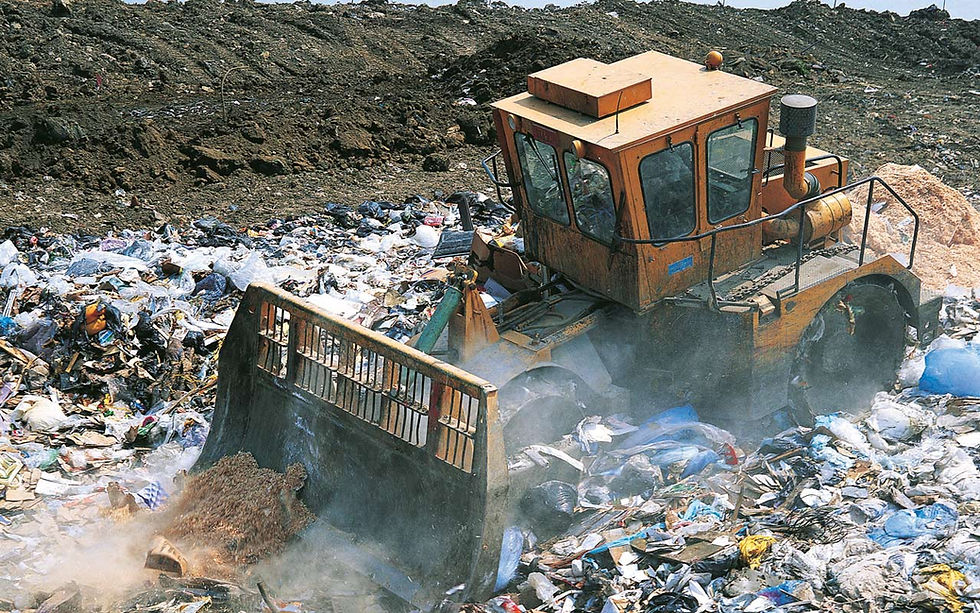
Across the globe, the fashion industry loses a staggering $150 billion dollars annually due to unsold and returned products. More than 92 million tons of textile waste is intentionally destroyed, often burned and covered up in landfills, each year. Both are the industry’s attempt to clear warehouse space and appear to support a brand exclusive diatribe.
In Europe alone, nearly 9% of all industry products are destroyed before ever seeing a retail store or being sold online. After decades of pressure to force change, the practice of intentionally destroying products becomes illegal across the European Union, in a tiered and multi-year rollout. On July 19, 2026, the ESPR begins a new era of sustainability across the fashion industry, holding companies accountable.
• The Constraint: Only large enterprises will now be prohibited from destroying unsold apparel and footwear during the first phase of the ESPR rollout. Large companies are defined as enterprises with more than 250 employees and more than $25 million in assets.
• The Operational Shift: Brands will now be forced to adopt predictive AI inventory systems, "Demand-First" manufacturing, and re-introduce deposit rich collection manufacturing. If you cannot deliver the excess to legal liquidators, wholesalers, and off-price companies, the cost of overproduction will become a permanent liability on your books. Sticking out as the brand that has multiple warehouse space full of products without a home, a public PR nightmare.
Positive Parts: The practice of being a sustainable company will no longer be a mission statement, but a must follow practice, becoming common place in the years to come.
The Negative Notes: Price increases will be a part of the new way of business. An increased price provides a cushion for companies to pay for associated costs to incorporate the ESPR; including small-batch manufacturing, producing only on-demand, and selling unsold product at discounted prices to clear warehouses prior to launching the next collection.
The ESPR will continue rolling out mandates until every clothing company is held accountable in 2030.
California’s Climate Disclosure Deadline (August 10,2026)
The Law: SB 253 Climate Corporate Data Accountability Act
California is the world’s fifth-largest economy, acting as a de facto federal standard. By August 10, 2026, any fashion entity doing business in the state with annual revenues over $1B must file its first public carbon disclosure.
The Scope- Accountability across all sectors begins
Scope 1: Direct Emissions-The Brand’s Footprint:
These are emissions from sources that the fashion company directly owns or controls. Company vehicles or corporate cars used to move samples or executives, On-Site Heating of the corporate headquarters and inside flagship stores, Industrial Processes including a sample lab or a small-batch factory, and the Bottom-Line which is the brand’s home-base pollution.
Scope 2: Indirect Energy-The "Plugged-In" Footprint:
These are emissions from the generation of purchased electricity, steam, heating, and cooling consumed by the company. Store Lighting-the power for bright lights, the AC or digital displays at every retail location are included in Scope 2. Warehouse-Power inside warehouses or distribution centers, Office-Power within every store, warehouse, factory, and distribution center powering on computers, servers and lightbulbs fall within this scope. Finally, the Botton-Line in Scope 2 is the utility bills the company pays to outside and external companies that burn the fuel the brand uses.
While the dreaded Scope 3, the entire supply chain, looms for 2027, the current 2026 filing is still a high-stakes “financialization” of carbon and extremely important to report. Scope 3 is responsible for 90-95% of their carbon footprint. If a company cannot figure out their Scope 1 and Scope 2, disaster is around the corner in the forms of fines and being shutdown.
• The Constraint: Brands must report verified Scope 1 and Scope 2 emissions 2026
• The Operational Shift: Carbon is now a fiscal metric. Investors will now be able to rank luxury houses and fast-fashion giants' side-by-side based on their "Carbon Credit Score" and begin to deeply hold companies accountable for their sustainability efforts.
Furthermore, beginning in August 2026, a high carbon footprint will be a sign of operational inefficiency and a risk to shareholder value.
The Positive Parts: Companies following the new mandates will illustrate for investors, end consumers, and potential new investors, their desire to minimize their overall footprint and be held accountable for ill-practices. The CCDAA mandates will help lower the global supply chain pollution.
The Negative Notes: A 3-5% price increase per item sold is looming. Companies are less expensive suppliers, who also usually have the least amount of experience.
3. The Global Digital Passport -The DPP Rollout
The Law: The EU Digital Product Passport & UK Alignment
Transparency is moving from the "About Us" page to the garment label. Throughout 2026, the Digital Product Passport (DPP) is becoming the technical standard for any brand wishing to sell in the European and UK markets. June 2026 the digital database comes “alive” and companies begin inputting details. Full rollout begins early 2027 with a simple one liner- no QR code, no sale.
• The Constraint: Every garment must be equipped with a scannable data carrier (QR or NFC) that tracks its material origin, chemical usage, and repairability.
• The Operational Shift: This turns every item into a verifiable digital asset. It kills the "greenwashing" era, when brands claim a cotton shirt is "organic" or "fair-trade" without a blockchain-backed data trail to prove it.
The Positive Parts: "I promise you we are sustainable" is out and "show me" is in. The DPP requires 125 verified data points, with some loop holes linking farm certifications, but the result is leveling the playing field. A recent study from Brain & Company suggests the implementation of the DPP will double the resale value of high-end items.
The Negative Notes: While your closet becomes a portfolio of assets rather than a pile of disposable goods. The DPP transition is painful, time consuming and the up front costs are extraordinary, but the result will be a more resilient industry and more efficient production avenues.
The "Triple-Front War" has created a new reality, where compliance becomes the new creative. While the fashion industry holds a collective breath, the ‘Pre-Transparency’ era will soon be a memory, liquidated at 80% off the clearance racks. In 2026 the most successful brands won’t be the ones with the best silhouette, but the ones with the cleanest data. What remains will be a leaner, smarter, and legally accountable industry that finally knows exactly what it’s making and exactly what it’s worth. The transition will provide companies the ability to foresee supplier risks, months in advance. Today, companies might only see the upfront costs eating their monthly budgets, but done right, the same companies will soon see savings both in their budgets and passed down to the end consumer.